Vietnam continues to attract strong interest from foreign companies exploring growth opportunities in Southeast Asia. With solid economic momentum, rising consumer demand, and a strong manufacturing base, the country has become an important destination for European businesses planning Vietnam business expansion.
In Q1 2026, Vietnam’s GDP grew by 7.83% year-on-year, while total retail sales of goods and services reached approximately VND 1,902.8 trillion, up 10.9% compared with the same period last year. These figures highlight Vietnam’s long-term market potential, but they also show why companies need a well-adapted Vietnam market entry strategy.
Entering Vietnam requires more than a national-level view. Vietnam regional markets can differ significantly in consumer behaviour, decision-making speed, distribution networks, pricing expectations, and business development methods. For foreign companies, the key question is not only “Should we enter Vietnam?” but also “Where should we start, and how should we adapt by region?”
Why Regional Differences Matter in Vietnam Market Entry Strategy
Vietnam is often described as one of Southeast Asia’s most dynamic growth markets. While this is true, it can also create an oversimplified view of the country. Foreign companies may look at national GDP growth, population size, or retail expansion and assume that a single sales strategy can be applied across the whole country.
In practice, market entry in Vietnam usually happens region by region. A product that gains traction quickly in Ho Chi Minh City may need a different approach in Hanoi. A distributor with strong coverage in the South may not have the same influence in the North. A B2B supplier targeting industrial customers may find that its real opportunity is not in the largest cities, but in nearby manufacturing provinces such as Bac Ninh, Hai Phong, Dong Nai, Binh Duong, or Long An.
This regional complexity affects several key parts of Vietnam business expansion:
- Customer expectations may vary by region.
- Sales cycles may be shorter in some markets and longer in others.
- Distribution channels may be fragmented and category-specific.
- Business relationships may require different levels of trust-building and local follow-up.
- Pricing and territory control may become more difficult when multiple partners are involved.
For European companies, this means that a successful Vietnam market entry strategy should be built around regional prioritisation, not only national ambition.
For companies exploring this decision, this practical discussion on Vietnam distribution channels and sales strategy offers useful additional context on how regional market differences, distributor selection, and long-term sales development are connected.
Understanding Vietnam Regional Markets
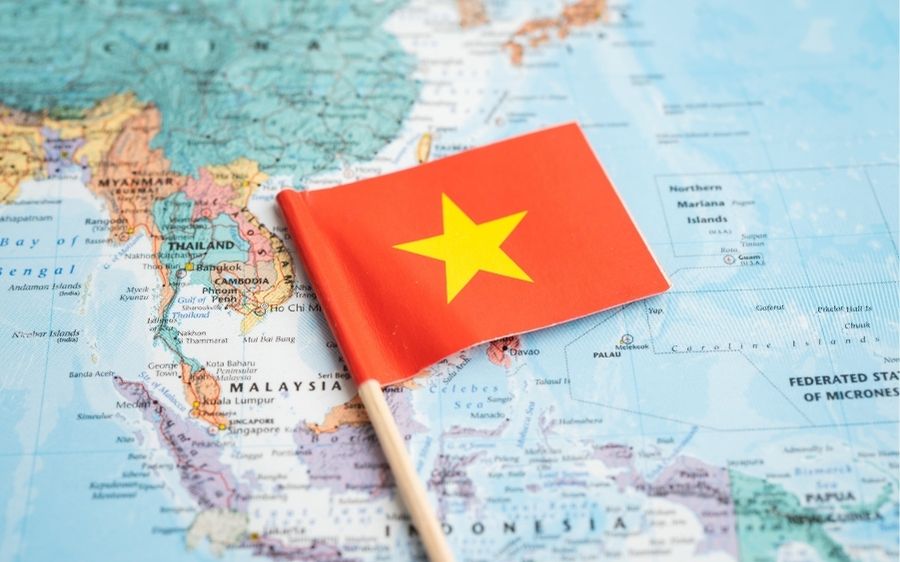
Vietnam can broadly be understood through several important market clusters: the North, the South, the Central region, and major industrial provinces. These areas are connected, but they do not always operate in the same way from a commercial perspective.
Northern Vietnam
Northern Vietnam, especially Hanoi and surrounding provinces, often plays an important role in government relations, institutional business, industrial supply chains, and B2B sectors. Hanoi is the political capital and a key centre for administration, finance, education, and professional services.
For foreign companies selling to public-sector organisations, regulated sectors, industrial buyers, or large local groups, the North can be an important starting point. Nearby provinces such as Bac Ninh, Hai Phong, Hai Duong, Hung Yen, and Thai Nguyen are also part of major manufacturing and logistics corridors.
The northern market often requires patience, credibility, and relationship-building. Decision-making may be more structured, especially in B2B environments. Companies entering this region should invest time in understanding local stakeholders, building trust, and demonstrating long-term commitment.
Southern Vietnam
Southern Vietnam, led by Ho Chi Minh City, is often seen as the country’s most commercially dynamic region. Ho Chi Minh City is a major business hub, with strong activity in consumer goods, retail, services, e-commerce, technology, and private-sector entrepreneurship.
For many B2C companies, Ho Chi Minh City can be a practical first market to test product-market fit, retail positioning, online sales, and distributor performance. Consumers may be more exposed to new brands, new formats, and digital-first purchasing behaviour.
The surrounding provinces, including Dong Nai, Binh Duong, and Long An, are also important for manufacturing, logistics, and industrial supply chains. This makes the South relevant not only for consumer brands, but also for B2B companies supplying factories, industrial operators, and export-oriented manufacturers.
Central Vietnam
Central Vietnam is sometimes overlooked by foreign companies that focus only on Hanoi and Ho Chi Minh City. However, the region can be relevant depending on the sector. Cities such as Da Nang, Hue, and Nha Trang may offer opportunities in tourism, hospitality, logistics, lifestyle products, education, and selected service sectors.
Central Vietnam can also play a role in phased expansion. For some companies, it may not be the first market, but it can become an important bridge once the brand has tested its offer in the North or South.
The key is not to treat Central Vietnam as a secondary market by default. Instead, companies should assess whether the region matches their customer profile, channel model, and operational requirements.
Industrial Provinces
For B2B Vietnam market entry, industrial provinces are often just as important as major cities. Many foreign companies focus on Hanoi vs Ho Chi Minh City market differences, but the actual buyers, factories, warehouses, or suppliers may be located outside the urban centres.
Provinces such as Bac Ninh, Hai Phong, Dong Nai, Binh Duong, and Long An are important for manufacturing, logistics, electronics, furniture, packaging, components, and industrial services. These locations are especially relevant for companies involved in sourcing, supplier development, technical sales, quality control, or export to Vietnam.
For industrial suppliers, the best first market may not be the biggest consumer city. It may be the region where target factories, technical buyers, and supply chain partners are concentrated.
Hanoi vs Ho Chi Minh City Market: Different Starting Points, Different Logic
The Hanoi vs Ho Chi Minh City market comparison is one of the most important considerations for foreign companies entering Vietnam. Both cities are major economic centres, but they often require different commercial approaches.
Ho Chi Minh City is usually the more natural starting point for consumer brands, retail concepts, e-commerce testing, and fast-moving commercial activities. The market is large, competitive, and commercially active. It can be useful for testing demand, collecting customer feedback, and evaluating potential distributors.
Hanoi, on the other hand, is often important for companies that need credibility, institutional access, B2B relationships, or a stronger presence in the North. It may be especially relevant for sectors linked to government relations, education, infrastructure, industrial development, professional services, and premium positioning.
This does not mean that Ho Chi Minh City is always better for B2C or that Hanoi is always better for B2B. The right answer depends on the company’s product, target customer, pricing level, sales cycle, and channel requirements.
A practical way to compare the two markets is to ask:
- Where are the target customers located?
- Which region has the strongest distribution partners for this category?
- Where can the company test demand with manageable risk?
- Which market gives the company better access to decision-makers?
- Which city fits the brand’s positioning and pricing strategy?
- Can the company support local follow-up after the launch?
Vietnam Consumer Behaviour Can Vary by Region
Vietnam consumer behavior is shaped by income levels, lifestyle, age, trust, local culture, digital habits, and retail access. This means that companies should avoid assuming that one message, one pricing model, or one channel strategy will work nationwide.
In major cities, consumers are often more exposed to international brands, modern retail, digital platforms, and social commerce. This can make Hanoi and Ho Chi Minh City attractive markets for brand testing. However, even between these two cities, customer expectations may differ.
In Ho Chi Minh City, consumers may be more open to new products, promotional campaigns, online discovery, and lifestyle positioning. In Hanoi, trust, reputation, and perceived brand credibility may play a stronger role in the buying process, especially for premium products or services.
In second-tier cities and provincial markets, price sensitivity, availability, local recommendations, and retail relationships may become more important. Traditional trade can still play a major role, while online channels may support awareness and initial sales.
For European companies, this creates an important lesson: consumer research should not only focus on national trends. It should also examine regional preferences, local competitors, purchase occasions, retail behaviour, and customer trust factors.

Distribution Networks Are Not Equal Across Regions
Distribution is one of the most important challenges in Vietnam market entry strategy. Vietnam’s sales channels can be fragmented, multi-layered, and highly dependent on product categories. A distributor with a large national network may not always be the best partner for a specific brand or region.
Some distributors are strong in the South but weak in the North. Some have relationships with modern trade but limited reach in traditional trade. Some are effective in B2B sales but less suitable for consumer retail. Others may have access to many channels but lack the focus needed to build a new foreign brand.
This is why foreign companies should be careful when selecting a Vietnam distributor. The goal is not simply to find the biggest partner. The goal is to find the right partner for the right category, region, and stage of market development.
Companies should also pay attention to channel conflict. If pricing is not clearly controlled, online discounts can affect offline retailers. If regional territories are not defined, distributors may compete against each other. If one partner is expected to cover the entire country without sufficient capability, market development may slow down.
A more realistic approach is to start with a controlled regional strategy. This allows the company to test demand, monitor distributor performance, adjust pricing, and build stronger local relationships before expanding nationwide.
How to Choose the Right First Market for Vietnam Business Expansion

The right first market for Vietnam business expansion depends on the company’s business model.
For B2C brands, Ho Chi Minh City is often a strong starting point because of its commercial dynamism, retail activity, and openness to new products. It can be useful for testing product positioning, pricing, digital marketing, and distributor performance.
For premium European brands, the first market should be chosen based on brand fit, purchasing power, retail environment, and trust-building potential. Both Hanoi and Ho Chi Minh City can be relevant, but the communication strategy may need to differ.
For B2B companies, the first market should be chosen based on where target customers are located. A company selling industrial equipment, components, packaging, factory services, or technical solutions may need to prioritise industrial provinces rather than city centres.
For companies exporting to Vietnam, the first priority should be to identify the right importer, distributor, or local partner. Market validation should include not only demand research, but also import requirements, pricing structure, after-sales support, and channel control.
For companies using Vietnam as a sourcing or manufacturing base, the regional question becomes different. The focus should be on supplier capability, factory location, logistics infrastructure, quality standards, and export readiness.
In all cases, companies should avoid launching in too many regions too quickly. Vietnam is a promising market, but it requires focus. A phased strategy is often more effective than immediate national coverage.
Common Mistakes Foreign Companies Make
Many foreign companies underestimate the importance of regional differences when entering Vietnam. A common mistake is assuming that one local partner can cover the whole country effectively. In reality, a distributor may be strong in one region but have limited influence in another.
Another mistake is choosing the first market based only on city size. Ho Chi Minh City and Hanoi are both important, but they are not always the right starting point for every business. A B2B company may find stronger opportunities in industrial provinces, while a consumer brand may need to test both modern trade and e-commerce before expanding offline.
Foreign companies may also apply the same sales message, pricing model, or channel strategy nationwide. However, Vietnam consumer behavior varies across regions, income groups, and retail environments. A message that works for urban consumers may not perform the same way in provincial markets.
Finally, companies often underestimate how long market development takes. Initial meetings, distributor discussions, or early purchase orders do not always mean long-term traction. Building trust, managing pricing, supporting partners, and gathering customer feedback all require consistent local follow-up.
Final Thoughts
Vietnam offers strong opportunities for foreign companies, but it should not be treated as one single market. The country’s regional differences affect customer behaviour, distribution, sales cycles, partnership models, and market entry priorities.
For companies planning Vietnam business expansion, a regional approach can reduce risk and improve execution. Instead of trying to cover the whole country immediately, foreign companies should identify the most relevant first market, choose partners carefully, test demand, and scale step by step.
The real question is not whether Vietnam is attractive. The real question is how to enter the market in a way that matches regional realities.
A strong Vietnam market entry strategy should therefore combine national ambition with local precision. Companies that understand Vietnam regional markets, adapt to local consumer behaviour, and build the right regional partnerships will be better positioned for sustainable long-term growth.