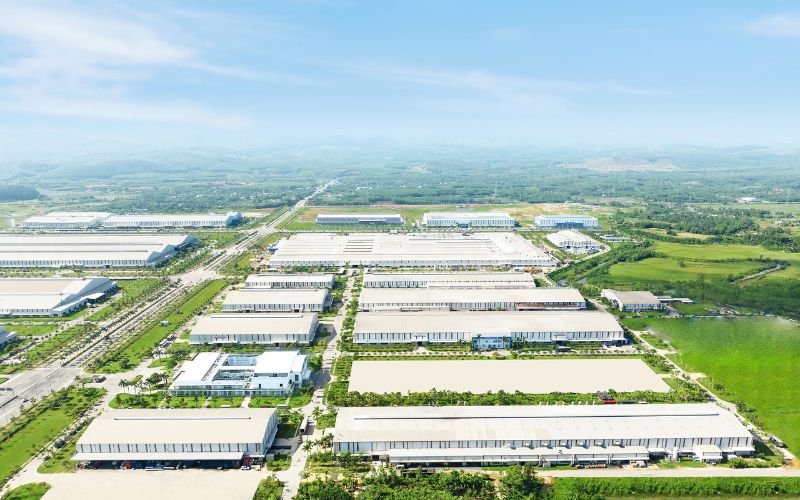
When sourcing large equipment from Vietnam, buyers often focus on machinery, production capabilities, certifications, and quoted prices. These factors are important, but they do not tell the whole story.
Manufacturing large industrial equipment requires more than having the right machines. The factory must also have enough physical space to handle oversized components and a workflow that allows materials and equipment to move efficiently through each production stage.
For foreign companies evaluating a Vietnamese manufacturer, this distinction matters. A supplier may have capable machinery but still struggle with internal movement, assembly, testing, or project coordination if the factory layout is not designed for large-scale production.
Why Large Equipment Requires a Different Factory Setup
Large equipment places different demands on a manufacturing facility than smaller industrial products.
Size and weight are two of the most obvious factors. Large components may require overhead cranes, lifting systems, reinforced floors, or specialized handling equipment. They also need sufficient clearance during transportation and assembly. A production floor that works well for smaller components may become restrictive when handling equipment several meters long or components weighing several tons.
The production process itself can also take up considerable space. Large equipment may pass through fabrication, machining, surface treatment, sub-assembly, final assembly, inspection, and testing before it is ready for shipment. These activities cannot always be compressed into a conventional production line.
There is also the question of movement. Materials, components, tools, and partially assembled equipment must move between different areas without creating unnecessary handling or safety risks.
This makes factory configuration an operational issue rather than simply a facility feature. For large equipment manufacturing, the physical environment needs to support the production process from beginning to end.
Beyond factory space and equipment, understanding how to evaluate a manufacturer’s overall capabilities is an important part of the sourcing process. This video explores what buyers should look for when qualifying a manufacturing partner in Vietnam.
Factory Space: The Physical Requirements
The first consideration is whether the factory has enough space to accommodate the equipment and the activities surrounding it.
Production floor and working clearance
Large components need more than floor space to sit on. Workers require sufficient clearance to assemble, position, inspect, and move them safely.
A crowded production area can make handling more difficult and restrict access to certain parts of the equipment. In contrast, adequate working clearance allows operators and lifting equipment to move around large components without repeatedly repositioning them.
For buyers, factory size should therefore be considered in relation to the type of equipment being manufactured rather than as a standalone number.
Lifting and handling capacity
Overhead cranes and other lifting systems can be essential when producing heavy industrial equipment. Their importance goes beyond simply moving finished products.
Components may need to be lifted during fabrication, positioned for assembly, rotated for welding or machining, and moved between production areas. The factory’s lifting capacity therefore needs to match the dimensions and weight of the equipment being produced.
During a factory assessment, buyers should look at both the available lifting equipment and how it is integrated into the production area.
Storage and staging areas
Large equipment production also requires space for materials and work-in-progress components.
Steel, fabricated parts, machined components, purchased assemblies, and finished subassemblies may all need temporary storage before reaching the next production stage. Without dedicated staging areas, materials can end up occupying valuable production space or obstructing movement.
Well-organized staging helps keep the production floor accessible while making it easier for workers to identify what is ready for the next step.
Assembly and testing areas
Final assembly can be particularly demanding because multiple components may need to be brought together in one location.
The factory should have enough room to assemble the equipment without interfering with other production activities. Testing requires similar consideration. Depending on the equipment, manufacturers may need dedicated areas for functional checks, dimensional inspection, load testing, or other validation activities.
These spaces are part of the manufacturer’s practical production capacity, even if they do not appear on a machinery list.
Workflow: Moving Materials and Equipment Through Production
Having enough space is only one part of the equation. How that space is organized determines how efficiently the factory can use it.
For large equipment, production may follow a sequence such as
Material receiving → Fabrication → Machining → Sub-assembly → Final assembly → Testing → Dispatch
Ideally, the layout should support this sequence with minimal unnecessary movement.
If a component repeatedly has to travel across the factory between two stages, production becomes more dependent on internal transportation and additional handling. This can consume time and create opportunities for damage, delays, or coordination problems.
A well-planned workflow places related activities in a logical sequence. Materials arrive at an appropriate receiving area, move into production, progress through the required manufacturing stages, and eventually reach assembly and testing without creating unnecessary backtracking.
The same principle applies when multiple projects are being produced at the same time. Large equipment manufacturers may need to manage several sets of components, work orders, and assembly activities simultaneously. Without a clear workflow, one project can interfere with another and create bottlenecks.
This is why factory layout and production workflow should be evaluated together. Space provides the physical capacity, while workflow determines how effectively that capacity is used.
How Space and Workflow Affect Production Performance
The practical value of factory space and workflow becomes clearer when looking at their impact on production performance.
Production efficiency
Efficient movement reduces the amount of time spent transporting materials and repositioning equipment. Workers can focus more of their time on fabrication, assembly, inspection, and other value-adding activities.
For large equipment projects, where components may be difficult to move, avoiding unnecessary handling can make a meaningful difference to overall production efficiency.
Quality and production control
A structured workflow can also make production easier to monitor.
When components move through clearly defined stages, manufacturers can better track work-in-progress and identify where an issue has occurred. Dedicated assembly and testing areas provide greater control over final production activities.
This becomes especially relevant for customized equipment, where production may involve multiple specifications and customer requirements.
Safety
Handling oversized and heavy components introduces risks that are less significant in smaller-scale manufacturing.
Clear movement paths, appropriate lifting systems, sufficient working clearance, and organized staging areas can help reduce unnecessary handling and congestion on the factory floor.
Safety is therefore closely connected to how the physical environment is designed and how production activities are sequenced.
Lead time
Poorly organized movement can create delays even when a manufacturer has sufficient machinery and labor.
A component waiting for space, equipment, or access to another production area can hold up subsequent operations. When production areas and workflow are coordinated, manufacturers have a better basis for keeping projects moving according to schedule.
For buyers, this is particularly important when large equipment is being manufactured to a project timeline rather than produced as a standard off-the-shelf product.
What Buyers Should Assess in a Vietnam Manufacturer
A factory visit can reveal information that a supplier’s equipment list or company profile cannot.
Instead of looking only at the number of machines available, buyers evaluating large equipment manufacturing in Vietnam should consider how the entire facility supports production.
Key areas to assess include:
- Production space: Is there enough room for the size of equipment being manufactured?
- Lifting capability: Can the factory safely handle the expected component weights and dimensions?
- Material staging: Are raw materials, components, and work-in-progress products stored without obstructing production?
- Assembly capacity: Is there a dedicated area large enough for final assembly?
- Testing facilities: Can the manufacturer conduct the required inspection and testing activities on-site?
- Internal movement: Do materials follow a logical route between production stages?
- Project capacity: Can the factory manage several large projects without creating major congestion or bottlenecks?
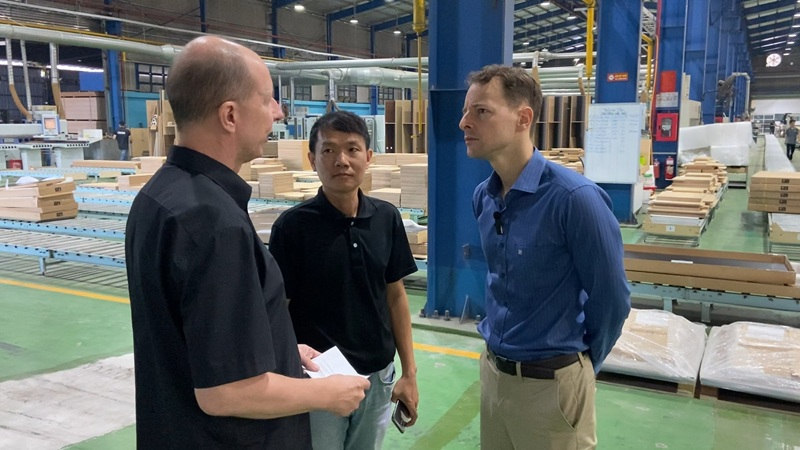
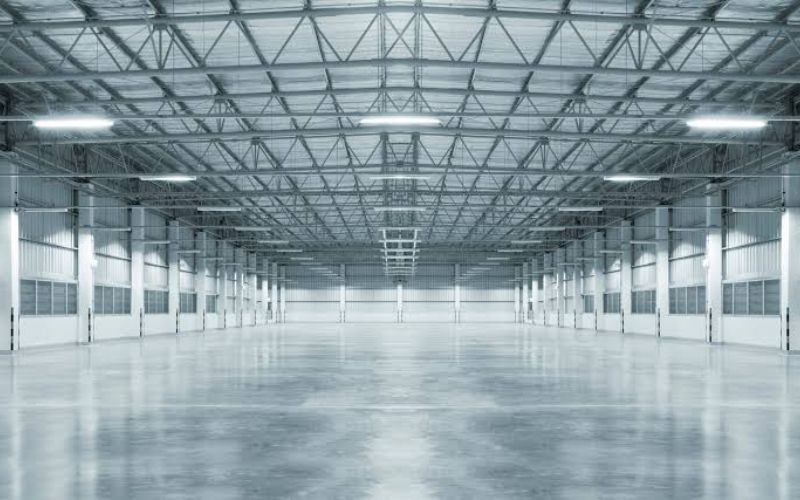
During a site visit, it is also useful to observe the factory while production is actually taking place. A facility may look spacious when empty but operate very differently when several projects are underway.
For foreign buyers, this is one reason factory audits and site visits can be valuable before committing to a large equipment manufacturing project. They provide a more practical view of how the supplier’s stated capabilities translate into day-to-day production.
Conclusion
Large equipment manufacturing in Vietnam requires more than a capable machine shop.
The physical factory needs to accommodate oversized components, lifting operations, assembly, testing, storage, and internal movement. At the same time, those areas need to work together through a logical production workflow.
For buyers, the key question is therefore not simply whether a manufacturer owns the required machinery. It is whether the factory’s space, handling capacity, layout, and workflow can support the entire production process.
Evaluating these factors early can give buyers a clearer picture of a supplier’s practical manufacturing capability and help them identify potential production constraints before a large equipment project begins.