International manufacturers are reassessing how they organize production across Asia. Trade tensions, supply chain disruptions and the need for greater operational flexibility have encouraged businesses to diversify their manufacturing networks while maintaining established operations in China.
Within this shift, China Plus One Vietnam has emerged as an important strategic consideration for companies seeking an additional production base in Southeast Asia. Vietnam offers an established export manufacturing sector, proximity to Chinese industrial hubs and access to major international markets.
However, building an effective regional production network requires careful planning. Companies need to identify suitable manufacturing activities, evaluate local capabilities and establish the operational structure needed to manage production across multiple locations.
This article examines Vietnam’s role in the China Plus One strategy, the industries offering potential for diversification and the practical considerations for international businesses.
What Is the China Plus One Strategy?
The China Plus One strategy is a manufacturing diversification model in which a company maintains its existing operations in China while developing additional production capacity in another country. Its purpose is to distribute supply chain exposure, improve business continuity and create greater flexibility in production planning.
China remains an important manufacturing center, supported by extensive industrial infrastructure, specialized suppliers and established logistics networks. For companies with long-standing Chinese manufacturing partnerships, these capabilities can remain valuable within a diversified regional structure.
An additional production location allows businesses to distribute orders according to product requirements, available capacity, manufacturing costs and destination markets.
Several factors influence this decision. Changes in international trade policies can affect the landed cost of imported goods, while disruptions in transport or production may expose weaknesses in concentrated supply networks. Companies are also seeking alternative locations as they expand into new markets and develop more complex manufacturing requirements.
The China Plus One model provides a framework for addressing these considerations without requiring companies to abandon established supplier relationships.
The central business question is therefore which manufacturing activities should remain in China and which can be effectively developed elsewhere.
Why Is Vietnam a Key Destination for China Plus One?
Vietnam has several characteristics that make it relevant to international companies evaluating additional manufacturing locations.
Its geographical proximity to China allows businesses to maintain connections with established suppliers while developing production operations in Southeast Asia. This is particularly relevant for manufacturers that rely on Chinese machinery, specialized components or materials that are not yet readily available through local supply networks.
The country’s export-oriented industrial sector provides another important advantage. According to Vietnam’s National Statistics Office, manufactured goods accounted for 88.7% of the country’s merchandise export value in 2025.
This reflects the scale of its participation in international production networks.
Vietnam also benefits from trade agreements with several major economies. The EU–Vietnam Free Trade Agreement (EVFTA), Comprehensive and Progressive Agreement for Trans-Pacific Partnership (CPTPP), and Regional Comprehensive Economic Partnership (RCEP) provide frameworks for market access and regional economic integration.
For eligible products, these agreements can offer preferential tariff treatment. However, companies must assess the applicable product-specific rules of origin, documentation requirements and customs procedures before incorporating potential tariff savings into their business plans.
Foreign investment further contributes to the development of the industrial ecosystem. Manufacturing and processing attracted approximately US$21.01 billion in registered foreign investment in 2025, accounting for 54.7% of Vietnam’s total registered FDI that year.
For international manufacturers, these characteristics create opportunities to establish an additional production base while remaining connected to existing Asian supply chains.
The commercial value of this arrangement ultimately depends on the products involved, the maturity of the relevant supplier network and the company’s ability to coordinate production across locations.
Which Industries Can Benefit From China Plus One in Vietnam?
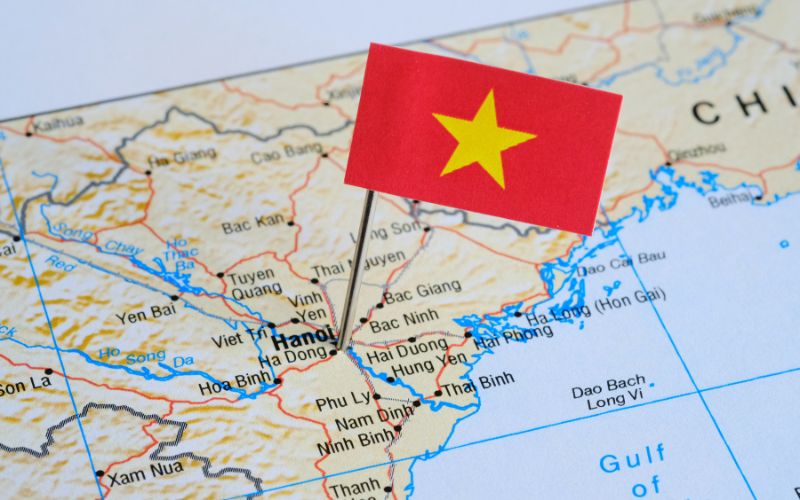
Vietnam’s industrial base covers several manufacturing sectors relevant to businesses considering regional diversification. The suitability of each industry depends on technical requirements, production volumes, component availability and the level of development required before commercial manufacturing can begin.
Electronics and Industrial Components
Electronics represents a major segment of Vietnam’s export economy. In 2025, exports of computers, electronic products and components reached approximately US$107.7 billion, according to the National Statistics Office.
International companies can explore opportunities in electronic assembly, printed circuit board assembly, cable harnesses and related manufacturing activities.
The industrial sector also includes metal fabrication, steel structures, precision machining and mechanical components.
For businesses producing industrial equipment or engineered products, the availability of suitable subcontractors may support a regional manufacturing model in which different facilities handle specific components or production stages.
Technical drawings, equipment capabilities, material specifications and testing requirements are essential considerations when assessing potential partners.
Textiles, Garments and Footwear
Vietnam has an established export manufacturing base serving international fashion, apparel and footwear markets.
The sector includes garment assembly, knitwear, technical textiles, footwear production and selected product development activities. Companies may find opportunities to diversify established product lines or develop new collections through local manufacturers.
The appropriate production model depends on the level of service required. Some factories specialize in cut-make-trim operations, while others can support material procurement, pattern development, sampling and finished-product manufacturing.
Buyers should examine minimum order quantities, available fabrics, production techniques and quality requirements before assigning product categories to new facilities.
Furniture and Building Materials
Furniture and construction-related products offer further opportunities for international buyers.
Vietnam has manufacturing capabilities across wooden furniture, indoor and outdoor furnishings, cabinetry, selected building materials and fabricated metal products.
Potential projects may involve complete finished goods, custom components or manufacturing based on buyer-provided technical specifications.
Product development requirements vary considerably within these categories. A standard furniture item may follow an established factory design, while a structural steel project can require engineering coordination, welding qualifications, dimensional controls and detailed inspection procedures.
For each product, the selection process should establish whether the manufacturer can deliver the required specifications at the expected commercial scale.
Key Challenges of Implementing China Plus One in Vietnam
Developing an additional manufacturing base requires a detailed understanding of the local industrial environment. Although Vietnam has an established export sector, capabilities vary between industries, manufacturers and individual facilities.
One of the primary considerations is supplier readiness. A factory may have experience producing similar goods but lack the equipment, technical resources or quality management systems required for a specific project. Assessing machinery, production capacity, workforce expertise and previous export experience helps businesses determine whether a potential partner can meet their requirements.
Material availability is another important factor. Vietnam continues to import substantial quantities of industrial inputs, including machinery, electronic components and raw materials. In 2025, China was the country’s largest import market, supplying goods valued at approximately US$186 billion.
General Statistics Office of Vietnam
For businesses implementing China Plus One, this creates a need to understand how materials move between manufacturing locations. Imported components may affect procurement schedules, inventory requirements and overall production costs.
Origin compliance also requires attention. Goods assembled or processed in Vietnam must satisfy the applicable origin requirements before they can qualify for Vietnamese origin or preferential treatment under a trade agreement. The assessment depends on the product, its manufacturing process and the relevant destination market.
Operational coordination presents an additional challenge. Managing facilities across different countries requires clear technical documentation, realistic schedules and consistent quality expectations. Communication gaps, delayed approvals or poorly managed subcontractors can affect delivery performance.
A successful diversification plan must therefore account for the entire manufacturing process, including upstream suppliers, logistics, customs requirements and operational oversight.
How to Build an Effective China Plus One Strategy in Vietnam
An effective China Plus One Vietnam strategy begins with defining the role that an additional manufacturing location should play within the company’s broader supply chain.
The implementation process should follow a structured approach that allows businesses to validate manufacturing capabilities, assess commercial feasibility and develop the operational resources required for sustainable expansion.
Assess Manufacturing Needs and Identify Suitable Partners
The initial assessment should establish which products, components or manufacturing activities are suitable for diversification.
Companies need to consider technical complexity, production volumes, delivery requirements and the availability of necessary materials. Products with clearly defined specifications and established manufacturing processes may provide a practical starting point for evaluating a new location.
Potential manufacturers should then be assessed against project-specific criteria, including equipment, production capacity, technical expertise, quality systems and previous experience with comparable products.
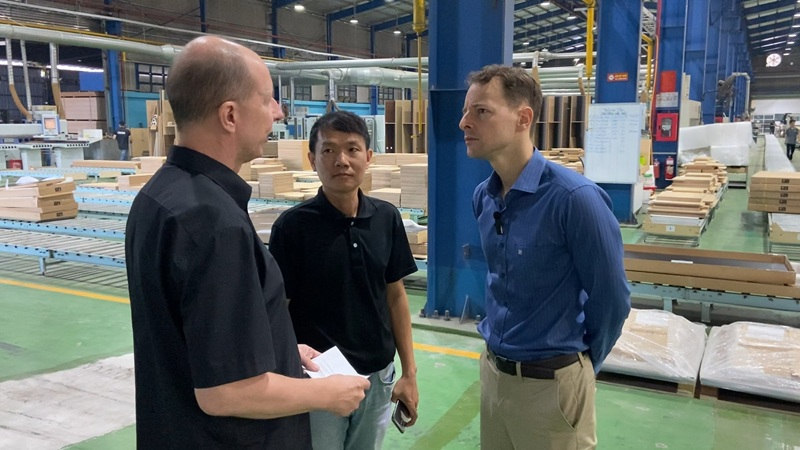
Factory visits and technical evaluations can help verify whether reported capabilities correspond to actual operating conditions.
The objective is to identify manufacturing partners whose resources and processes align with the company’s commercial and technical requirements.
Validate Production Through Pilot Projects
Pilot production provides an opportunity to evaluate manufacturing performance before committing larger volumes.
A controlled initial project allows businesses to assess product quality, lead times, communication efficiency and the ability to resolve technical issues.
It also provides more reliable information about total manufacturing costs. Beyond the quoted unit price, businesses should consider tooling, packaging, inland transportation, inspection, imported materials and potential rework.
Results should be measured against predefined acceptance criteria. These may include dimensional accuracy, functional performance, defect rates, production consistency and delivery reliability.
The findings can then inform decisions about additional product lines, order allocation and future capacity requirements.
Establish Local Operational Oversight
As manufacturing activities expand, consistent operational management becomes increasingly important.
Companies need clear procedures for production planning, technical approvals, quality inspections and communication with manufacturing partners.
Local oversight can support regular monitoring of factory performance, coordination between subcontractors and early identification of issues that may affect production schedules.
For international businesses operating without their own local teams, an external operational partner can provide support in managing manufacturing projects and maintaining visibility over day-to-day execution.
This approach allows organizations to develop additional production capacity while retaining control over quality, delivery expectations and supplier performance.
Conclusion
Vietnam offers international manufacturers an opportunity to strengthen supply chain diversification through its established industrial base, regional connectivity and export manufacturing capabilities.
The success of a China Plus One strategy depends on identifying suitable production activities, validating manufacturing partners and establishing effective operational controls.
For businesses evaluating Vietnam as an additional manufacturing location, a structured assessment and phased implementation process can provide a practical foundation for long-term expansion.