Steel structure projects rarely fail because of one dramatic mistake. More often, problems develop quietly during fabrication: a weld is accepted without sufficient inspection, material arrives later than planned, production is rescheduled around bottlenecks, or a small dimensional issue is discovered only after several components have already been completed.
For international buyers, these manufacturing weaknesses can become expensive because fabrication is closely tied to project schedules, quality compliance, shipping windows, and installation work. A defect discovered after delivery may require rework at the construction site, while a delayed batch can disrupt multiple downstream activities.
The key is therefore to identify where steel structure manufacturing typically breaks down and assess whether a supplier has controls in place before problems become visible. Two areas deserve particular attention: weld quality and production planning.
Weld Quality Risks
Welding is one of the most critical stages in structural steel fabrication because it directly affects the strength, dimensional accuracy, and service performance of the finished component. Unlike straightforward cutting or drilling, welding introduces heat, residual stresses, and potential internal imperfections that may not be visible during a basic visual inspection.
Common problems include porosity, incomplete fusion, lack of penetration, cracking, and excessive distortion. Some may be apparent from the surface, but others can remain hidden inside the joint. Common weld defects include porosity, incomplete fusion, lack of penetration, cracking, and excessive distortion. Some are visible on the surface, while others may remain hidden inside the joint. Depending on their type, location, and severity, these imperfections can compromise the strength and performance of welded connections.
Welding-related problems are widely recognized as a significant source of structural and fabrication failures, which is why welding deserves particular attention during supplier qualification.
Why Visual Inspection Falls Short
A factory can produce welds that look acceptable while still having internal defects. For critical joints, buyers may therefore need nondestructive testing (NDT), such as ultrasonic testing (UT) or radiographic testing (RT), depending on the project specification and applicable standard.
The important question is not simply whether a supplier says it performs NDT. Buyers should establish what method is used, which welds are tested, what acceptance criteria apply, and at what stage inspection takes place.
An effective process typically identifies defects during fabrication, when the affected component can still be repaired relatively efficiently. By contrast, discovering a weld problem after painting, shipment, or erection can multiply the cost because the buyer may have to remove coatings, transport components back to the workshop, perform site repairs, or repeat inspection.
What buyers should verify
Before awarding a structural steel contract, ask the manufacturer for evidence of its welding quality process, including:
- Applicable welding procedures and qualified welders
- Weld inspection and acceptance criteria
- NDT methods used for the project
- Percentage or sampling frequency for NDT
- Inspection records and non-conformance reports
- Whether inspection occurs during fabrication or only at final inspection
- How defective welds are repaired and retested
For export projects, these questions should be connected directly to the required standard. A supplier experienced in domestic fabrication may have capable welders but still lack the documentation, NDT discipline, or process controls expected for an international project.
The practical takeaway is simple: do not ask only whether a factory can weld structural steel; ask how it proves that its welds are acceptable before the components leave the factory.
This leads directly to the second major failure point. Even when welding quality is well controlled, a project can still fall behind if materials and production activities are not coordinated properly.
Production Planning Risks
Steel structure fabrication is a sequence rather than a collection of independent tasks. Material procurement affects cutting; cutting affects drilling and assembly; assembly affects welding and inspection; and completed fabrication affects painting, packing, loading, and shipment.
That dependency makes production planning one of the most consequential aspects of project execution. A factory can have sufficient machinery and skilled workers yet still miss its delivery date because materials, drawings, machines, labor, and production slots were not synchronized.
This is especially relevant for large or multi-phase structures. If one steel grade or component is unavailable, the factory may be unable to complete a particular assembly even when most other materials are ready. The resulting interruption can then push inspection, surface treatment, packing, and shipping milestones further down the schedule.
Common Planning Gaps
Several weaknesses are worth checking during supplier evaluation:
Inconsistent raw-material stock management.
If the manufacturer does not have reliable visibility over material availability, procurement may begin too late. Imported or project-specific steel grades can be particularly problematic because replacement material may require additional lead time.
Poor coordination between engineering and production.
Fabrication should not begin from outdated or incomplete drawings. Changes released after cutting or welding can trigger rework, material waste, and disruption to the original schedule.
Manual or fragmented scheduling.
When production status is tracked mainly through spreadsheets, messages, or verbal updates, management may not have a reliable view of work-in-progress, bottlenecks, or jobs approaching their deadlines.
Limited visibility into machine and labor capacity.
A factory may promise a delivery date without accounting for competing projects already occupying its welding lines, cranes, painting booths, or skilled workforce.
The more important point for buyers is that planning failures are often cumulative: a small delay at the material stage can eventually become a major delivery problem.
Look Beyond Delivery Dates
A supplier saying “your order will be ready in 10 weeks” provides very little evidence of execution capability. A stronger manufacturer should be able to explain how those 10 weeks are structured and how progress will be monitored.
Ask to see a representative production schedule showing key milestones such as
Material arrival → cutting → drilling → fit-up → welding → inspection → surface treatment → packing → dispatch.
For a major project, buyers should also establish how schedule changes are communicated. A supplier with digital or real-time production tracking can provide clearer visibility into work-in-progress, bottlenecks, and deviations than one relying entirely on manual updates. However, technology itself is not the objective; what matters is whether the system produces reliable, timely information that management actually uses.
Buyers should therefore ask:
- How is production progress recorded?
- Can the supplier provide milestone updates with evidence?
- How are delays escalated?
- How does the factory prioritize competing orders?
- What happens if a critical material arrives late?
- Can production status be linked to specific drawings, batches, or components?
The key distinction is between a delivery promise and a controlled production plan. A capable steel structure manufacturer should be able to demonstrate not only when the order is expected to ship but also how the factory intends to keep every preceding manufacturing stage on schedule.
For international buyers, this visibility is particularly valuable because they are often managing the project remotely. When production tracking is transparent, potential problems can be addressed while there is still time to adjust the schedule. When information remains opaque until the promised delivery date, the buyer may discover the problem only after the project has already moved into its critical path.
Tolerance and Fit-Up Risks
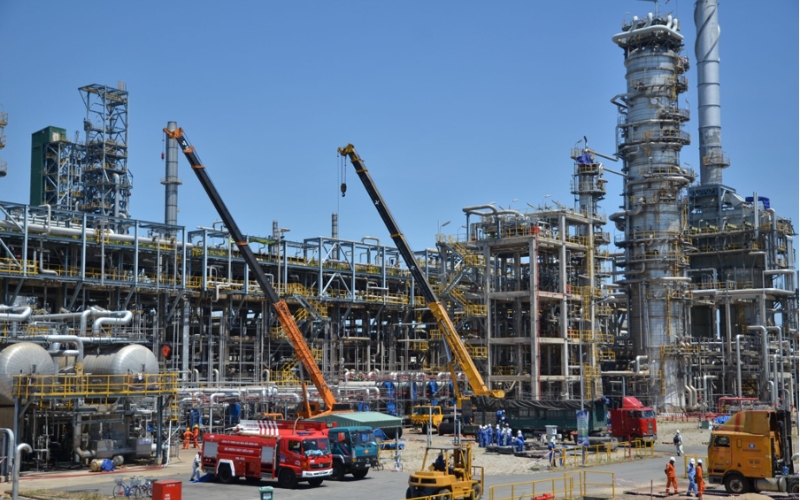
Dimensional accuracy can appear to be a minor fabrication detail until steel components reach the construction site. Small deviations introduced during cutting, drilling, plate preparation, or component alignment can accumulate across a structure. A connection that is only slightly misaligned may then become difficult or impossible to assemble according to the approved drawings.
The problem is particularly difficult for international buyers because the deviation may remain unnoticed throughout fabrication. Components can pass visual inspection and appear structurally sound, yet reveal fit-up problems only when cranes, bolts, and erection crews are already on site. At that stage, correcting the issue is no longer a simple workshop adjustment.
Tolerance on paper vs. tolerance in practice
A factory may state that it follows the tolerance requirements of the applicable construction standard. However, the permitted tolerance is not necessarily the same as the accuracy a manufacturer can consistently achieve.
Applicable standards define permissible dimensional tolerances for different components and fabrication processes. However, the tolerance permitted by a standard is not necessarily the same as the accuracy a manufacturer can consistently achieve in production. Modern CNC cutting, drilling, and automated fabrication equipment can support tighter dimensional control when properly calibrated and managed.
This distinction matters when comparing manufacturers. A supplier that routinely achieves tighter dimensional control may provide greater certainty during erection, particularly for complex structures with numerous interconnected components.
More importantly, field workers should not have to compensate for fabrication errors by enlarging holes, forcing connections, cutting components, or modifying plates without engineering approval. Such “make it fit” modifications can alter the intended connection geometry and potentially invalidate assumptions used in the original structural calculations.
What Buyers Should Ask
Rather than asking only which standard the factory follows, request evidence of how dimensional accuracy is actually controlled.
Useful questions include:
- What dimensional tolerances apply to cutting, drilling, assembly, and finished components?
- What equipment is used to measure deviations?
- Are measurements recorded during production or only at final inspection?
- Can the supplier provide recent dimensional inspection reports?
- How are non-conforming components identified and corrected?
- What is the escalation process when a dimension falls outside the approved tolerance?
For critical projects, buyers should compare actual tolerance-control records with the project’s specified requirements before mass production begins. This provides a much stronger indication of fabrication capability than a general statement that the factory follows international standards.
The practical lesson is straightforward: a manufacturer should be assessed not only on the tolerance it is permitted to meet but also on the tolerance it can repeatedly demonstrate in production.
Design-to-Fabrication Gaps
Not every manufacturing problem originates in manufacturing. In many steel structure projects, fabrication difficulties begin earlier, when design information is incomplete, unsuitable for production, or insufficiently coordinated with the fabricator.
A structurally valid design is not automatically a fabrication-ready design. Drawings may require further clarification on connection details, welds, material grades, tolerances, sequencing, or component interfaces before production can begin. If those issues are discovered only after fabrication starts, changes can trigger rework, material waste, schedule disruption, and additional engineering costs.
Common Design Gaps
Several warning signs deserve attention during project preparation.
Incomplete fabrication drawings can leave critical dimensions, connection details, weld specifications, or material requirements open to interpretation. Different teams may then make different assumptions.
Load calculation or connection-design gaps can create problems when the fabricated configuration does not fully correspond with the engineering assumptions behind the structure.
Insufficient design–fabrication coordination is another common issue. Engineers may optimize structural performance without considering manufacturing constraints, while fabricators may identify practical production problems only after drawings have already been approved.
For complex projects, early coordination using BIM and clash detection can help identify conflicts between structural components and other building systems before materials are cut. The value is not the software itself, but the ability to resolve design and interface problems while changes are still inexpensive.
Cross-Border Risks
International sourcing makes this disconnect more consequential because the buyer, designer, fabricator, and installation team may work under different technical frameworks.
A project designed for the European market, for example, may require compliance with EN 1090, specific execution classes, welding-quality requirements, material traceability, and documentation that differs from the practices used for a domestic project in Vietnam. Similar differences can arise between European, US, and other national standards.
Therefore, buyers should confirm before production begins:
- Which fabrication and execution standard governs the project?
- Which welding code and quality requirements apply
- What material certifications are required
- Which inspection and NDT procedures must be followed
- What documentation is needed for final acceptance?
- Whether the fabricator’s existing certification covers the actual project scope
This should be resolved during technical review, not after components have reached the destination country.
For international buyers, the key question is therefore not simply whether a factory has experience with steel fabrication. It is whether its engineering, fabrication, quality, and documentation systems are aligned with the requirements of the project’s destination market.
Conclusion
Most steel structure manufacturing failures are not unpredictable. They tend to originate from a relatively small group of recurring gaps: weak weld quality control, poor production planning, inadequate tolerance management, and insufficient coordination between design and fabrication.
The commercial consequences, however, can be significant. A defect identified during fabrication may be relatively straightforward to correct; the same issue discovered after shipment or during site erection can involve rework, additional transport, installation delays, and engineering revisions.
For buyers sourcing internationally, supplier evaluation should therefore go beyond machinery lists and production capacity. The more useful assessment is whether a fabricator can demonstrate controlled welding processes, transparent production tracking, documented dimensional accuracy, and early technical coordination against the correct destination-market standards.
Ultimately, the objective is not to find a factory that claims it can manufacture the structure. It is to find one that can prove it can manufacture the structure correctly, consistently, and to the required standard before the first component leaves the workshop.